Most marketers open Google Trends, look for what’s “hot,” and assume that’s the content plan.
We used to do that too.
The result? Posts that looked timely but delivered average engagement and very few real conversations. The issue wasn’t effort — it was misalignment.
Google Trends shows what people are searching for. Social platforms show what people are engaging with.
Those are two different signals.
At The Firm Collaborative, we’ve learned that the brands that convert consistently don’t chase trends blindly. They build systems that combine social behavior with real-world timing.
That execution is handled through AllPro JD, our delivery partner focused on social content, UGC systems, and platform-native distribution.
This is the exact workflow we use to turn trends into booked conversations — not just likes — in 2026.
Why Google Trends Alone Doesn’t Convert
Google Trends is useful — just not in the way most people use it.
Many teams treat it as a content idea generator. They find a trending keyword, write a post, and expect traction.
The problem is that search intent and social intent aren’t the same.
People search Google to solve a problem. People scroll social media to be entertained, inspired, or feel connected.
When you confuse the two, content feels forced.
Instead of using Google Trends to decide what to post, we use it to validate when a topic is worth posting about.
The Real Workflow: Social First, Trends Second
Each week, we spend time where audiences actually live — scrolling Instagram, TikTok, LinkedIn, Facebook, and X.
We save posts that:
already perform well
use formats that feel native
spark ideas that could work for the brand
Only after that do we open Google Trends.
Not to chase ideas — but to check timing.
Social trends move fast. Some last days. Some run for weeks. Google Trends helps us confirm which real-world moments are worth tying into those formats.
Using Real-World Moments Without Looking Desperate
Jumping on every trend is the fastest way to lose trust.
So we ask one question before using a trend:
Does this naturally connect to what the brand already represents?
A real example: while managing content for Olympic Oval in Calgary, we noticed Shai Gilgeous-Alexander trending heavily due to his MVP run.
That’s a real-world moment.
But the content format didn’t come from Google — it came from Instagram comparison videos that were already working that week.
The hook became simple:
“Did you just see Shai’s season? That’s exactly what [local athlete] did this year.”
We weren’t forcing relevance. We were borrowing attention to spotlight a story the audience already cared about.
Why Hooks Alone Don’t Convert
A strong hook earns attention — not action.
Conversion happens after engagement, not instead of it.
That’s where most brands fall apart. They drop a link in bio and hope someone clicks.
That’s friction.
The Comment-to-DM Strategy That Multiplies Reach
Instead of links, we use comment-triggered DMs.
Example:
“Comment ICE if you want to see available training times.”
Here’s why it works:
Comments signal engagement to the algorithm
More engagement increases reach
Auto-DMs deliver booking info instantly
We’ve seen this drive 5–10x more engagement compared to link-based posts.
The key boundary in 2026: This only works if the DM delivers real value. Empty auto-replies get flagged fast.
The 3–4 Split That Prevents Audience Fatigue
Conversion-focused content only works when it’s balanced.
We structure weeks using a 3–4 split:
3 CTA posts tied directly to business goals
4 brand awareness posts that build trust
The awareness content might include:
behind-the-scenes footage
interviews
light memes
training or process moments
This keeps pages human, not transactional.
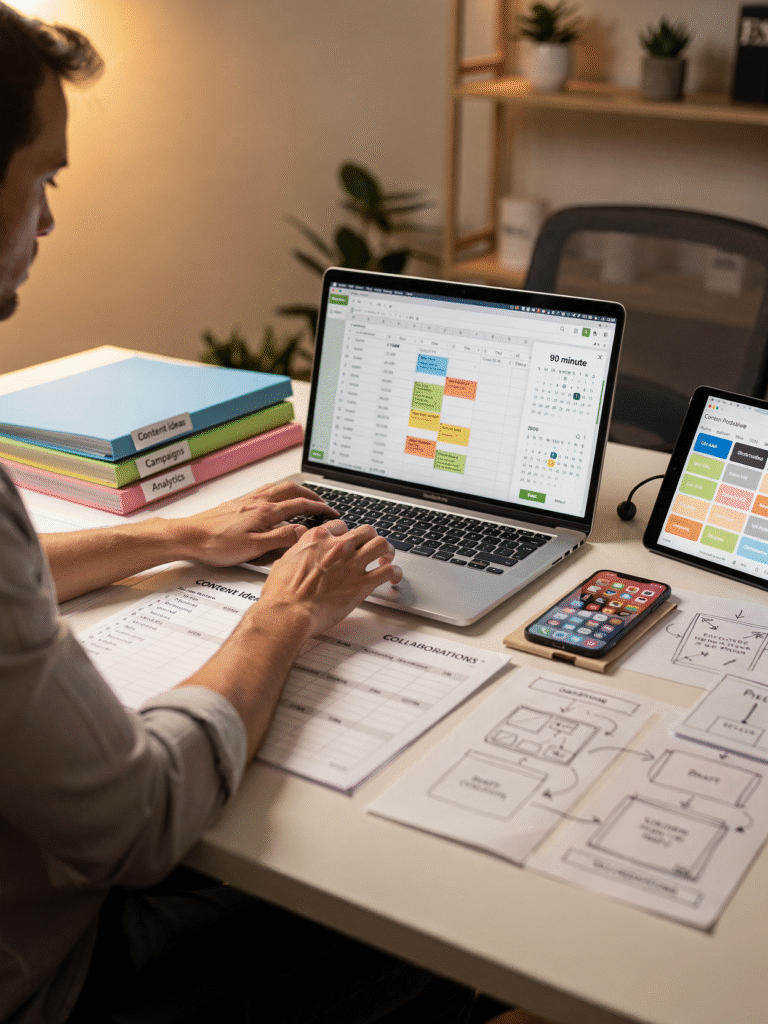
How We Plan a Week of Content in About 90 Minutes
The system matters more than inspiration.
Each Monday:
We open a folder per brand
Drop in saved posts from the week
Check Google Trends + local news
Organize ideas by format and urgency
Hot topics get posted immediately. Longer-running trends get scheduled.
Timing isn’t about perfection — it’s about windows.
When to Shoot Today vs Schedule Later
Some signals are obvious:
Seasonal content has a hard deadline
News-based hooks need fast execution
Logistics sometimes matter more than trends
The goal isn’t to catch everything. It’s to ship consistently and refine patterns over time.
That’s how systems outperform guesswork.
What to Do This Week
Pick one brand you manage.
Spend one hour scrolling where their audience lives. Save ten posts that could inspire content.
Then check Google Trends for timing validation — not ideas.
Match one rising topic with one proven format. Write a hook that connects the moment to the brand. Use a comment-to-DM CTA if it makes sense.
Post it. Track engagement. Learn.
That’s how trends turn into conversations — not noise.
Want a Social Calendar That Drives Real Conversations?
If your content is getting views but not inquiries, the issue usually isn’t creativity — it’s the lack of a repeatable social system.
At The Firm Collaborative, we design content strategies that align platform behavior, timing, and conversion paths.
Execution is delivered through AllPro JD, our social and UGC delivery partner focused on building content systems that perform — not just look good.
👉 Book a short strategy call to review how your social content currently converts:
Co-authored with AllPro JD, the social media and UGC execution partner within The Firm Collaborative ecosystem.
AllPro JD supports brands by turning trends, formats, and audience behavior into repeatable social systems that drive engagement, visibility, and inbound conversations.