




It’s a Systems Problem
Only 11% of sales professionals feel confident on customer calls.
Read that again.
That means most reps walk into conversations unsure how to handle objections, what to say next, or how to close without sounding awkward. When pressure hits, they guess. They improvise. And when results slip, leadership often blames the rep.
“Bad hire.”
“Wrong attitude.”
“Needs more motivation.”
But after years of building and fixing sales teams, here’s the truth:
Sales inconsistency is almost never a people problem.
It’s a systems problem.

What Actually Breaks Sales Teams
Companies spend over $70 billion a year on sales training.
And yet, most of that training is forgotten within 90 days.
Why?
Because training without reinforcement isn’t a system, it’s an event.
Reps hear objection handling once during onboarding. Maybe again in a quarterly workshop. Then they’re expected to recall it months later when a prospect pushes back with, “Your price is too high.”
Meanwhile:
Their not following a document process
They are only coaching reactively instead of structurally
Performance data lives in spreadsheets no one checks or the data in the CRM that can’t be trusted.
The result? Missed targets, frustrated managers, and reps who feel like they’re failing — even when they’re capable. Not to mention REVENUE LOSS
What “Sales Systems” Actually Mean
When people hear “sales systems,” they think scripts and rigidity.
That’s not what works.
A real sales system always has these three parts:
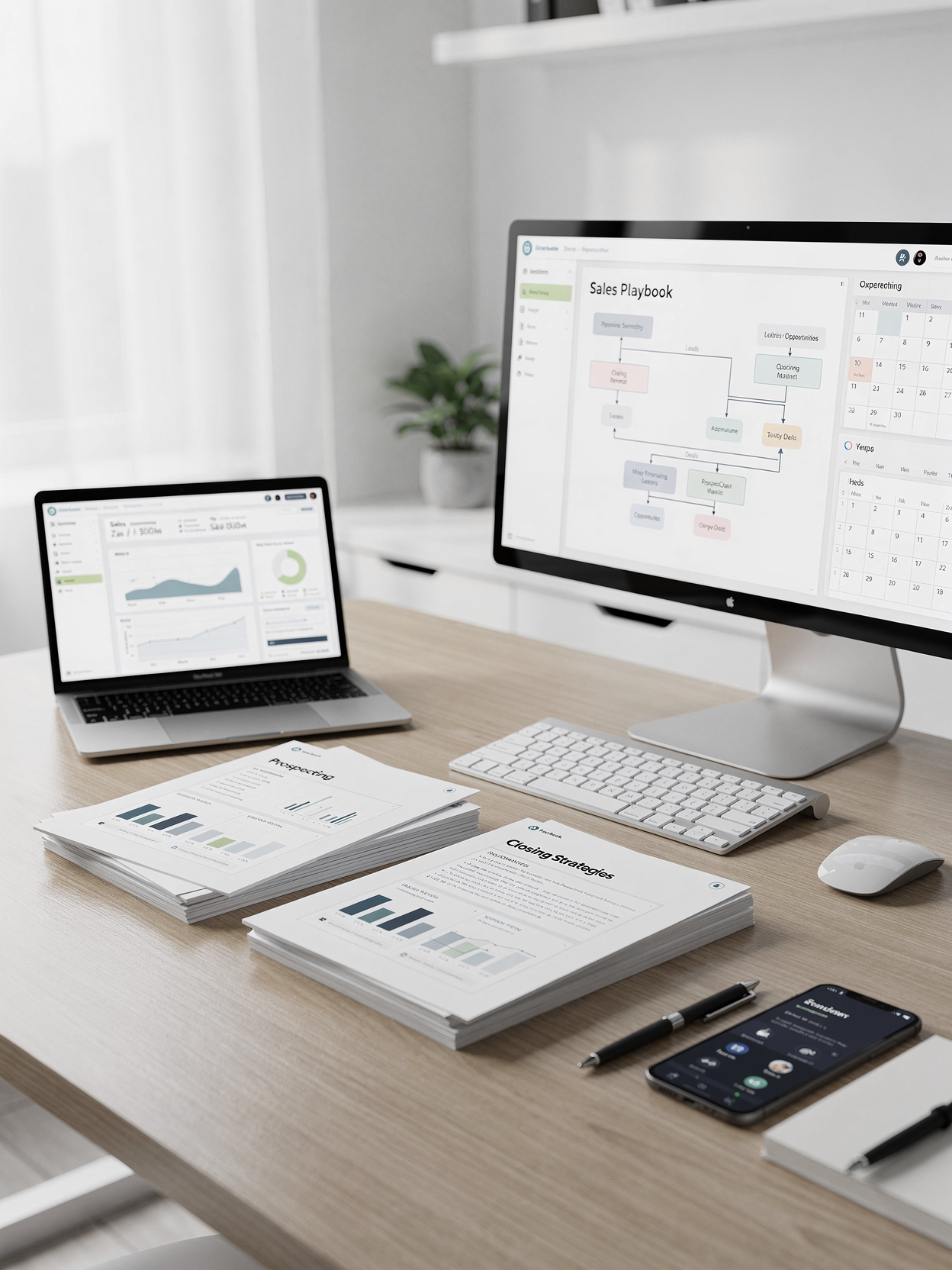
1. Clear Playbooks
Documented frameworks for discovery, objections, follow-up, and closing — so reps aren’t guessing under pressure.
2. CRM Discipline
A pipeline that shows where deals stall, why results vary, and what needs attention — in real time.
3. Ongoing Training Cadence
Short, frequent reinforcement that turns skills into habits instead of forgotten notes.
These systems don’t limit reps.
They free them.
When reps know what to do next, confidence shows up naturally.
Why Repetition Changes Everything
People don’t learn by hearing something once.
They learn by seeing it repeatedly, in context.
You can’t teach closing techniques in a single workshop and expect them to show up when it counts. What works is rhythm:
15–30 minute skill refreshers
Regular call reviews
Multiple formats: discussion, examples, real scenarios, practice practice practice
When skills are reinforced consistently, performance stops feeling fragile.
And the data backs it up:
Teams with defined sales processes outperform others by over 30%
Teams that actually enforce those processes see meaningful revenue gains
Same people.
Same market.
Different system.
The Metrics That Actually Matter
You can’t coach what you don’t measure.
High-performing teams track:
Call, answer and connect rates
Daily activity levels
Bookings per conversation
Conversion rates by stage
When the right metrics are visible, patterns emerge fast.
We’ve seen teams nearly double close rates in under 90 days simply by tightening follow-up structure and review cadence.

The Resistance to Structure (And Why It’s Wrong)
Reps worry systems will kill their style.
Managers worry structure feels like micromanagement.
But structure doesn’t remove personality , it supports it.
Think of it like learning music. You master the basics first. Then you improvise.
Sales works the same way.
Top reps elevate the system by learning a system they can apply.
Struggling reps finally have something to lean on.
Everyone improves.
Where ATP Comes In
At ATP Sales & Marketing, we help teams install sales systems that remove guesswork and create consistency.
That means:
Playbooks reps actually use
CRM structure that supports coaching
Training rhythms that stick
The goal isn’t hype.
It’s reliable performance.

Start Simple This Week
You don’t need a full overhaul to see progress.
Start with:
One documented objection framework
One visible pipeline dashboard
One recurring training rhythm
Clarity compounds faster than complexity.
Systems scale.
When results depend on individuals, performance fluctuates.
When results depend on structure, revenue stabilizes.
If your sales team feels unpredictable, the issue isn’t effort or talent.
It’s infrastructure.
Ready to Fix the System?
If you want help installing sales systems your team will actually use:
👉 Book a free strategy call
Or learn more at The Firm Collaborative’s website.